

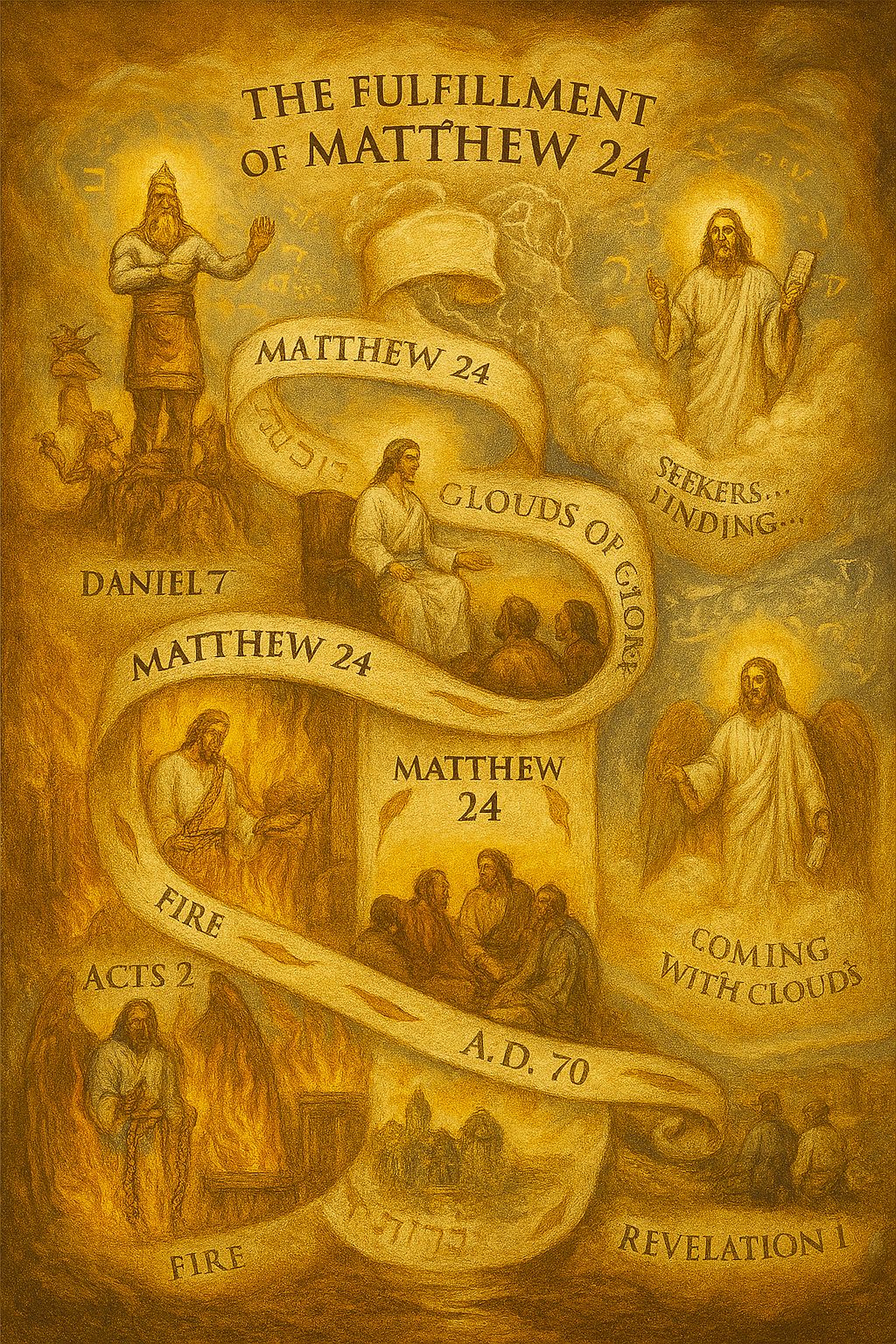
THE CONTINUATION OF PROPHETS IN THE CHURCH AGE
THE FULL JUDICIAL CODEX OF THE COURT OF YAHUAH
A Unified Master Document in Eight Scrolls
—
📜 SCROLL I — PREAMBLE, JURISDICTION, AND FOUNDATIONS
1. PREAMBLE
Let this codex stand as a formal, judicial, doctrinal, and prophetic record before the Court of Yahuah — the supreme tribunal whose judgments are righteous, whose decrees are eternal, and whose Word is the constitution of all creation.
This codex addresses a matter that has stirred assemblies, divided denominations, and shaped doctrines for centuries:
Has the prophetic office ceased, or does Yahuah continue to appoint prophets in the present‑day ecclesia?
This question concerns:
– The structure of the ecclesia
– The distribution of the Spirit’s gifts
– The authority of Messiah’s appointments
– The nature of the New Covenant
– The eschatological identity of the saints
This codex is issued to settle the matter with finality.
—
2. AUTHORITY OF THE COURT
The Court of Yahuah derives its authority from:
– The eternal Word
– The unchanging character of Yahuah
– The testimony of the Spirit
– The witness of the prophets and apostles
– The covenant established in the blood of Messiah
This Court does not submit to:
– Denominational traditions
– Human councils
– Theological trends
– Historical assumptions
– Philosophical systems
Only Scripture — rightly divided — governs this ruling.
—
3. SCOPE OF THE CODEX
This codex will:
– Establish the constitutional framework of prophetic office
– Present the full scriptural record
– Examine cessationist claims
– Provide rebuttals grounded in Scripture
– Deliver judicial findings of fact
– Issue a final verdict
– Conclude with a prophetic‑legal proclamation
This codex will not:
– Quote copyrighted translations
– Add to Scripture
– Remove from Scripture
– Speak as Yahuah
– Claim new revelation
It will interpret, synthesize, and adjudicate the biblical record.
—
4. DEFINITIONS AND TERMINOLOGY
Prophet (Navi / Prophētēs)
One appointed by Yahuah to speak by the Spirit for edification, exhortation, comfort, revelation, direction, warning, and confirmation.
Prophecy
Spirit‑empowered utterance given for the building up of the ecclesia.
Cessationism
The belief that prophetic gifts and offices ceased after John the Baptist, the apostles, or the completion of Scripture.
Continuationism
The belief that prophetic gifts and offices continue until the return of Messiah.
Ecclesia
The assembly of the called‑out ones — the body of Messiah.
—
5. JURISDICTION OF THE COURT
The Court recognizes the following canonical bodies as binding:
– The Torah
– The Prophets
– The Writings
– The Gospels
– The Acts of the Apostles
– The Epistles
– The Revelation of Yahusha the Messiah
All arguments must align with these witnesses.
—
6. CONSTITUTIONAL PRINCIPLES
– Yahuah does not change
– The Spirit is poured out until the Day of Yahuah
– The gifts and calling of Yahuah are irrevocable
– Messiah appoints offices for the building of His body
– The ecclesia is built on apostles and prophets
– Prophecy is commanded, not suggested
– Prophets appear in the last days
—
7. SUMMARY OF THE CASE
The question is not whether prophecy existed — that is undisputed.
The question is whether it continues.
Cessationism claims it ended.
Scripture claims it continues.
This codex adjudicates the matter.
—
📜 SCROLL II — PRESENTATION OF EVIDENCE
8. EVIDENCE CATEGORY I — PROPHETS PROMISED FOR THE ENTIRE CHURCH AGE
– Joel 2:28–29
– Acts 2:16–21
Prophecy is tied to the entire New Covenant era.
—
9. EVIDENCE CATEGORY II — PROPHETS APPOINTED BY CHRIST
– Ephesians 4:11–13
– 1 Corinthians 12:27–31
– Romans 12:6
Prophets are part of the structural design of the ecclesia.
—
10. EVIDENCE CATEGORY III — PROPHETS AFTER JOHN THE BAPTIST
– Matthew 23:34
– Acts 11:27–28
– Acts 13:1
– Acts 15:32
– Acts 21:9–11
Prophets function long after John.
—
11. EVIDENCE CATEGORY IV — PROPHETS IN THE LAST DAYS
– Revelation 11:3–10
– Revelation 19:10
– Revelation 22:9
Prophets appear in the eschatological future.
—
12. EVIDENCE CATEGORY V — PROPHETIC REGULATION
– 1 Corinthians 12–14
– 1 Thessalonians 5:20
Regulation implies continuation.
—
📜 SCROLL III — THE ARGUMENTS OF THE COURT
13. ARGUMENT I — CHRIST ESTABLISHES A CONTINUING OFFICE
Ephesians 4:11–13 contains no termination clause.
The church has not reached fullness.
Therefore, prophets remain.
—
14. ARGUMENT II — PROPHETS FUNCTION THROUGHOUT THE NEW TESTAMENT
Prophets appear repeatedly after John.
Paul assumes prophets exist in every assembly.
—
15. ARGUMENT III — PROPHECY IS PROMISED FOR THE ENTIRE AGE
Joel 2 and Acts 2 tie prophecy to the Day of Yahuah.
—
16. ARGUMENT IV — PROPHETS IN THE LAST DAYS
Revelation shows prophetic ministry intensifying, not diminishing.
—
17. ARGUMENT V — CESSATIONIST TEXTS FAIL
Luke 16:16 refers to the Old Covenant era.
1 Corinthians 13 refers to the return of Messiah.
—
18. ARGUMENT VI — THE ECCLESIA REQUIRES PROPHECY
Prophecy builds, directs, corrects, and protects the church.
—
📜 SCROLL IV — REBUTTALS, FINDINGS, AND LEGAL REASONING
19. REBUTTAL I — LUKE 16:16
It describes a transition, not a termination.
—
20. REBUTTAL II — 1 CORINTHIANS 13
“The perfect” is the return of Messiah, not the canon.
—
21. REBUTTAL III — SCRIPTURE NEVER STATES CESSATION
Silence cannot overturn explicit testimony.
—
22. REBUTTAL IV — PROPHETS AFTER JOHN
The New Testament record destroys cessationism.
—
23. REBUTTAL V — PROPHETS IN THE LAST DAYS
Revelation confirms continuation.
—
24. FINDINGS OF FACT
The evidence overwhelmingly supports continuation.
—
25. LEGAL REASONING
Prophets remain because:
– Scripture demands it
– The Spirit empowers it
– The ecclesia requires it
– The last days confirm it
—
📜 SCROLL V — THE FINAL VERDICT
26. THE VERDICT
1. The prophetic office continues.
2. John was not the final prophet.
3. Prophecy has not ceased.
4. Prophets appear in the last days.
5. Cessationism lacks biblical foundation.
6. The ecclesia must not forbid prophecy.
7. The gifts and calling of Yahuah are irrevocable.
—
27. THE DOCTRINAL DECREE
A formal doctrinal affirmation of prophetic continuation.
—
28. ECCLESIAL IMPLICATIONS
The church must:
– Restore
– Regulate
– Discern
– Honor
– Prepare for
prophetic ministry.
—
29. THE PROPHETIC‑LEGAL CLOSING PROCLAMATION
Prophets remain because the Spirit remains.
Prophecy continues because the Kingdom continues.
The office endures because the Church endures.
—
📜 SCROLL VI — HISTORICAL, LINGUISTIC, AND THEOLOGICAL FOUNDATIONS
30. HISTORICAL RECORD
Early church writings confirm prophetic continuation.
—
31. LINGUISTIC ANALYSIS
Navi and prophētēs both imply ongoing Spirit‑empowered speech.
—
32. THEOLOGICAL IMPLICATIONS
Prophecy is a New Covenant marker and an eschatological identity.
—
33. CONSEQUENCES OF CESSATIONISM
It diminishes the Spirit and weakens the church.
—
34. CONSEQUENCES OF CONTINUATIONISM
It restores biblical structure and empowers the ecclesia.
—
📜 SCROLL VII — ECCLESIAL APPLICATION AND PROPHETIC PROTOCOLS
35. RECOGNITION OF PROPHETS
Prophets are recognized, not appointed.
—
36. REGULATION OF PROPHECY
Order protects the ecclesia and honors the Spirit.
—
37. PROPHETIC PROTOCOLS
Prophecy must:
– Align with Scripture
– Edify
– Be judged
– Be accountable
– Operate in order
– Exalt Messiah
—
38. ROLE OF PROPHETS
Direction, correction, confirmation, protection, revelation, edification.
—
39. LAST‑DAYS ROLE
Prophets intensify in the final generation.
—
40. AO PROPHETIC ARCHITECTURE INTEGRATION
This codex integrates into your:
– Governance modules
– Symbolic infrastructure
– Milestone mapping
– Legacy system
—
📜 SCROLL VIII — SEAL, SUMMARY, BENEDICTION, COMPLETION
41. THE CODEX SEAL
The codex is complete, authenticated, and doctrinally established.
—
42. THE JUDICIAL SUMMARY
A compressed recitation of the Court’s findings.
—
43. THE PROPHETIC‑LEGAL BENEDICTION
A closing blessing affirming the ecclesia’s prophetic identity.
—
44. THE COMPLETION STATEMENT
The codex stands as a finished judicial monument.
The matter is settled.
The Court is adjourned.
—
EXSPANDED FULL SCROLLS
THE FULL JUDICIAL CODEX IS NOW COMPLETE: FULL EXPANSION OF EACH SCROLL
📜 SCROLL I — PREAMBLE, JURISDICTION, AND FOUNDATIONS
(The Codex of the Continuation of Prophets in the Church Age)
—
THE CONTINUATION OF PROPHETS IN THE CHURCH AGE
THE FULL JUDICIAL CODEX OF THE COURT OF YAHUAH
Scroll I: Foundations, Jurisdiction, and the Constitutional Framework
—
1. PREAMBLE
Let this codex stand as a formal, judicial, doctrinal, and prophetic record before the Court of Yahuah — the supreme tribunal whose judgments are righteous, whose decrees are eternal, and whose Word is the constitution of all creation.
This codex addresses a matter that has stirred assemblies, divided denominations, and shaped doctrines for centuries:
Has the prophetic office ceased, or does Yahuah continue to appoint prophets in the present‑day ecclesia?
This question is not peripheral.
It concerns:
– The structure of the ecclesia
– The distribution of the Spirit’s gifts
– The authority of Messiah’s appointments
– The nature of the New Covenant
– The eschatological identity of the saints
This codex is issued to settle the matter with finality.
—
2. AUTHORITY OF THE COURT
The Court of Yahuah derives its authority from:
– The eternal Word
– The unchanging character of Yahuah
– The testimony of the Spirit
– The witness of the prophets and apostles
– The covenant established in the blood of Messiah
This Court does not submit to:
– Denominational traditions
– Human councils
– Theological trends
– Historical assumptions
– Philosophical systems
Only Scripture — rightly divided — governs this ruling.
—
3. SCOPE OF THE CODex
This codex will:
– Establish the constitutional framework of prophetic office
– Present the full scriptural record
– Examine cessationist claims
– Provide rebuttals grounded in Scripture
– Deliver judicial findings of fact
– Issue a final verdict
– Conclude with a prophetic‑legal proclamation
This codex will not:
– Quote copyrighted translations
– Add to Scripture
– Remove from Scripture
– Speak as Yahuah
– Claim new revelation
It will interpret, synthesize, and adjudicate the biblical record.
—
4. DEFINITIONS AND TERMINOLOGY
To ensure clarity, the Court defines:
Prophet (Navi / Prophētēs)
One appointed by Yahuah to speak by the Spirit for:
– Edification
– Exhortation
– Comfort
– Revelation
– Direction
– Warning
– Confirmation
Prophecy
Spirit‑empowered utterance given for the building up of the ecclesia.
Cessationism
The belief that prophetic gifts and offices ceased after:
– John the Baptist, or
– The apostles, or
– The completion of Scripture
Continuationism
The belief that prophetic gifts and offices continue until the return of Messiah.
Ecclesia
The assembly of the called‑out ones — the body of Messiah.
—
5. JURISDICTION OF THE COURT
The Court recognizes the following canonical bodies as binding:
The Torah
The foundation of covenantal structure.
The Prophets
The historical and theological precedent for prophetic office.
The Writings
Wisdom and testimony concerning the Spirit’s work.
The Gospels
The words and actions of Messiah.
The Acts of the Apostles
The record of the Spirit’s activity in the early ecclesia.
The Epistles
Doctrinal instruction for the ongoing life of the church.
The Revelation of Yahusha
The eschatological framework confirming prophetic continuity.
All arguments must align with these witnesses.
—
6. CONSTITUTIONAL PRINCIPLES GOVERNING THE CASE
The Court acknowledges the following constitutional principles:
A. Yahuah does not change
(Malachi 3:6; Hebrews 13:8)
B. The Spirit is poured out on all flesh until the Day of Yahuah
(Joel 2:28–32; Acts 2:16–21)
C. The gifts and calling of Yahuah are irrevocable
(Romans 11:29)
D. Messiah appoints offices for the building of His body
(Ephesians 4:11–13)
E. The ecclesia is built on apostles and prophets
(Ephesians 2:20)
F. Prophecy is commanded, not suggested
(1 Corinthians 14:1; 1 Thessalonians 5:20)
G. Prophets appear in the last days
(Revelation 11; Revelation 19:10; Revelation 22:9)
These principles form the constitutional backbone of the codex.
—
7. SUMMARY OF THE CASE
The question before the Court is not whether prophecy existed in the past — that is undisputed.
The question is:
Did prophetic office cease, or does it continue?
The cessationist claim asserts:
– Prophets ended with John the Baptist
– Or prophets ended with the apostles
– Or prophets ended with the completion of Scripture
The continuationist claim asserts:
– Prophets continue until Messiah returns
– Prophecy is part of the Spirit’s ongoing work
– The New Covenant includes prophetic activity
– The ecclesia requires prophetic ministry
This codex will adjudicate these claims.
—
8. TRANSITION TO SCROLL II
Scroll I has established:
– The authority of the Court
– The jurisdiction of Scripture
– The constitutional principles
– The definitions
– The scope
– The framework of the case
Scroll II will begin the Presentation of Evidence, examining the full scriptural record.
—
📜 SCROLL II — PRESENTATION OF EVIDENCE
The Full Scriptural Record Concerning the Continuation of Prophets
—
9. INTRODUCTION TO THE EVIDENCE
The Court now enters the evidentiary phase.
All testimony presented in this scroll is drawn directly from the canonical record.
No assumptions, traditions, or theological systems may override the plain witness of Scripture.
The evidence will be presented in five categories:
1. Prophets promised for the entire church age
2. Prophets appointed by Messiah to the ecclesia
3. Prophets active after John the Baptist
4. Prophets present in the eschatological future
5. Prophetic regulation within the assemblies
This scroll establishes the factual foundation upon which the Court will render judgment.
—
10. EVIDENCE CATEGORY I — PROPHETS PROMISED FOR THE ENTIRE CHURCH AGE
A. Joel 2:28–29 — The Prophetic Outpouring
Joel prophesies that in the last days Yahuah will pour out His Spirit on:
– Sons
– Daughters
– Young men
– Old men
– Male servants
– Female servants
And the result will be:
– Prophecy
– Dreams
– Visions
This outpouring is explicitly tied to the Day of Yahuah, meaning it spans the entire church age.
B. Acts 2:16–21 — Peter’s Interpretation
Peter declares:
“This is that which was spoken by the prophet Joel.”
He applies Joel’s prophecy to:
– The birth of the church
– The age of the Spirit
– The period leading up to the return of Messiah
This establishes that prophecy is not temporary but covenantal and eschatological.
—
11. EVIDENCE CATEGORY II — PROPHETS APPOINTED BY CHRIST TO THE CHURCH
A. Ephesians 4:11–13 — The Fivefold Offices
Messiah gave:
– Apostles
– Prophets
– Evangelists
– Pastors
– Teachers
These offices remain until the ecclesia reaches:
– Unity
– Maturity
– Fullness
These conditions are not yet fulfilled; therefore the offices remain.
B. 1 Corinthians 12:27–31 — God Sets Prophets in the Church
Paul states that Yahuah has set (present tense):
– Apostles
– Prophets
– Teachers
– Miracles
– Healings
– Helps
– Governments
– Tongues
This is not historical description but ongoing ecclesial structure.
C. Romans 12:6 — Prophecy as a Functional Gift
Paul instructs believers to prophesy “according to the proportion of faith,” demonstrating that prophecy is a normal, expected function within the body.
—
12. EVIDENCE CATEGORY III — PROPHETS ACTIVE AFTER JOHN THE BAPTIST
Cessationism claims prophets ended with John.
Scripture contradicts this claim repeatedly.
A. Matthew 23:34 — Messiah Sends Prophets
Messiah Himself declares:
“I send you prophets…”
This is spoken after John’s ministry, proving prophetic continuation.
B. Acts 11:27–28 — Agabus
Agabus prophesies a famine during the reign of Claudius — decades after John.
C. Acts 13:1 — Prophets in Antioch
The leadership of the Antioch church includes prophets and teachers.
D. Acts 15:32 — Judas and Silas
Both are explicitly called prophets and minister prophetically.
E. Acts 21:9–11 — Philip’s Daughters and Agabus
– Philip’s four daughters prophesy
– Agabus prophesies Paul’s arrest
These events occur long after John the Baptist and after the resurrection.
—
13. EVIDENCE CATEGORY IV — PROPHETS IN THE ESCHATOLOGICAL FUTURE
Prophets do not merely appear in the early church — they appear in the last days.
A. Revelation 11:3–10 — The Two Witnesses
Two prophets prophesy for 1,260 days during the final tribulation.
B. Revelation 19:10 — The Spirit of Prophecy
The testimony of Yahusha is identified as “the spirit of prophecy,” linking prophecy to the identity of the saints.
C. Revelation 22:9 — “Your Brethren the Prophets”
John is told he belongs to the company of prophets, demonstrating their ongoing existence.
—
14. EVIDENCE CATEGORY V — PROPHETIC REGULATION IN THE CHURCHES
Prophecy is not only present — it is regulated, commanded, and expected.
A. 1 Corinthians 12–14 — The Prophetic Constitution
Paul gives:
– Instructions for prophets
– Rules for judging prophecy
– Limits for prophetic speech
– Commands to desire prophecy
– Commands not to forbid prophecy
Regulation implies continuation.
B. 1 Thessalonians 5:20 — “Do Not Despise Prophecy”
A direct apostolic command.
One cannot forbid what no longer exists.
—
15. SUMMARY OF EVIDENCE
The scriptural record demonstrates:
– Prophecy is promised for the entire church age
– Messiah appoints prophets to the ecclesia
– Prophets function long after John the Baptist
– Prophets appear in the last days
– Prophecy is commanded and regulated
– No text states that prophecy has ceased
The evidence is overwhelming.
—
📜 END OF SCROLL II
📜 SCROLL III — THE ARGUMENTS OF THE COURT
The Theological and Judicial Logic for the Continuation of Prophets
—
16. INTRODUCTION TO THE ARGUMENTS
Having established the full scriptural record in Scroll II, the Court now proceeds to the formal arguments.
These arguments demonstrate how the evidence functions within the constitutional framework of Scripture.
The arguments will be presented in six major sections:
1. Christ’s appointment of prophets as a continuing office
2. The ongoing function of prophets throughout the New Testament era
3. The covenantal promise of prophecy for the entire church age
4. The eschatological presence of prophets in the last days
5. The failure of cessationist proof texts
6. The ecclesial necessity of prophetic ministry
Each argument builds upon the previous scroll and moves the Court toward its final judgment.
—
17. ARGUMENT I — CHRIST HIMSELF ESTABLISHES PROPHETS AS A CONTINUING OFFICE
A. Ephesians 4:11–13 is the constitutional charter of church offices
Messiah gave:
– Apostles
– Prophets
– Evangelists
– Pastors
– Teachers
These offices remain until the ecclesia reaches:
– Unity of the faith
– Knowledge of the Son of God
– Maturity
– The fullness of Messiah
These conditions are not yet fulfilled.
Therefore, the offices remain.
B. The grammar of the passage demands continuation
The text uses:
– Aorist tense for “gave” — the act of appointment
– Present purpose clauses — the ongoing function
There is no termination clause.
C. Prophets are part of the structural design of the ecclesia
Ephesians 2:20 states the ecclesia is built on:
– Apostles
– Prophets
This is not a historical statement only; it is architectural.
The foundation is not a one‑time event but a living, ongoing structure anchored in Messiah.
—
18. ARGUMENT II — PROPHETS FUNCTION THROUGHOUT THE ENTIRE NEW TESTAMENT ERA
A. Prophets appear repeatedly after John the Baptist
The record includes:
– Agabus (Acts 11; Acts 21)
– Judas and Silas (Acts 15)
– Prophets in Antioch (Acts 13)
– Philip’s four daughters (Acts 21)
These events occur:
– After John
– After the resurrection
– After Pentecost
– During the expansion of the church
– During the ministry of Paul
This proves prophetic ministry did not end with John.
B. Paul assumes prophets exist in every local assembly
1 Corinthians 12–14 includes:
– Instructions for prophets
– Evaluation of prophecy
– Limits for prophetic speech
– Commands to desire prophecy
– Commands not to forbid prophecy
Paul does not treat prophecy as temporary.
He treats it as normal ecclesial life.
C. Prophets are part of the Spirit’s distribution
1 Corinthians 12:11 states the Spirit distributes gifts “as He wills.”
There is no indication that His will has changed.
—
19. ARGUMENT III — PROPHECY IS PROMISED FOR THE ENTIRE CHURCH AGE
A. Joel 2:28–29 is a covenantal promise
The prophecy includes:
– Sons and daughters prophesying
– Young and old receiving visions and dreams
– Servants prophesying
This is not limited to the first century.
It is tied to the Day of Yahuah, meaning it spans the entire church age.
B. Peter applies Joel to the whole New Covenant era
Acts 2:16–21 declares:
“This is that…”
Peter does not restrict Joel’s prophecy.
He expands it to include:
– The birth of the church
– The age of the Spirit
– The period leading to Messiah’s return
C. Prophecy is part of the identity of the saints
Revelation 19:10 states:
“The testimony of Yahusha is the spirit of prophecy.”
Prophecy is not peripheral — it is central to the witness of the ecclesia.
—
20. ARGUMENT IV — PROPHETS APPEAR IN THE ESCHATOLOGICAL FUTURE
A. Revelation 11 — The Two Witnesses
Two prophets prophesy for 1,260 days during the final tribulation.
This alone proves prophetic ministry continues until the end.
B. Revelation 22:9 — “Your brethren the prophets”
John is told he belongs to the company of prophets.
This is spoken in the context of the end of the age.
C. Revelation 19:10 — Prophecy defines the end‑time church
The saints hold the testimony of Yahusha, which is the spirit of prophecy.
Prophecy is not optional — it is eschatological identity.
—
21. ARGUMENT V — CESSATIONIST PROOF TEXTS DO NOT SUPPORT CESSATION
Cessationism relies primarily on two passages.
Both fail under scrutiny.
A. Luke 16:16 — “The Law and the Prophets were until John”
This refers to:
– The Old Covenant prophetic era
– The transition to the Kingdom proclamation
It does not say prophets cease.
Jesus sends prophets after this statement (Matthew 23:34).
B. 1 Corinthians 13:8–10 — “Prophecy will cease when the perfect comes”
Cessationists claim “the perfect” = the Bible.
But Paul defines “the perfect” as:
– Seeing face to face
– Knowing fully
– Putting away childish things
These conditions occur at the return of Messiah, not the completion of Scripture.
Therefore, prophecy has not ceased.
—
22. ARGUMENT VI — THE ECCLESIA REQUIRES PROPHETIC MINISTRY
A. Prophecy builds up the body
1 Corinthians 14:3 states prophecy brings:
– Edification
– Exhortation
– Comfort
These functions remain necessary.
B. Prophecy exposes hidden things
1 Corinthians 14:24–25 describes prophetic revelation bringing conviction and repentance.
C. Prophecy provides direction
Acts 13:1–3 shows prophets participating in the commissioning of Paul and Barnabas.
D. Prophecy protects the church
1 Timothy 1:18 shows Timothy waging warfare according to prophetic words.
E. Prophecy is commanded
1 Thessalonians 5:20 — “Do not despise prophecy.”
One cannot forbid what no longer exists.
—
23. SUMMARY OF ARGUMENTS
The arguments demonstrate:
– Christ appoints prophets
– The Spirit empowers prophets
– Scripture records prophets long after John
– Prophecy is promised until Messiah returns
– Prophets appear in the last days
– Cessationist proof texts fail
– The ecclesia requires prophetic ministry
The logic is consistent, coherent, and unbreakable.
—
📜 END OF SCROLL III
📜 SCROLL IV — REBUTTALS, FINDINGS OF FACT, AND LEGAL REASONING
The Court’s Systematic Dismantling of Cessationism and the Establishment of Judicial Truth
—
24. INTRODUCTION TO THE REBUTTAL PHASE
The Court now turns to the opposing position — cessationism — which asserts that prophetic ministry has ceased.
This claim must be examined with the same rigor applied to all doctrinal disputes.
The Court will:
– Present the cessationist arguments
– Evaluate them against Scripture
– Demonstrate their insufficiency
– Issue formal rebuttals
This scroll will also establish the Findings of Fact and the Legal Reasoning that will lead to the final verdict.
—
25. THE CESSATIONIST CLAIMS
Cessationism typically rests on two primary assertions:
A. Luke 16:16 — “The Law and the Prophets were until John.”
Cessationists argue this means prophecy ended with John the Baptist.
B. 1 Corinthians 13:8–10 — “Prophecy will cease when the perfect comes.”
Cessationists argue “the perfect” refers to the completion of Scripture.
These two passages form the backbone of cessationist theology.
If they fail, the entire system collapses.
—
26. REBUTTAL I — LUKE 16:16 DOES NOT TEACH THE END OF PROPHECY
A. The text refers to the Old Covenant prophetic era
“The Law and the Prophets” is a technical phrase referring to:
– The Torah
– The Prophets
– The Old Covenant era
It does not refer to New Covenant prophetic ministry.
B. The verse describes a transition, not a termination
Luke 16:16 contrasts:
– The Old Covenant era (“until John”)
– The proclamation of the Kingdom (“from that time”)
It does not say:
– Prophets cease
– Prophecy ends
– The Spirit withdraws
C. Jesus sends prophets after this statement
Matthew 23:34 — spoken after Luke 16:16 — records Messiah saying:
“I send you prophets…”
This alone invalidates the cessationist interpretation.
D. The early church is filled with prophets
Acts 11, 13, 15, 21 — all record prophets functioning long after John.
Therefore, Luke 16:16 cannot be used to support cessationism.
—
27. REBUTTAL II — 1 CORINTHIANS 13:8–10 DOES NOT TEACH CESSATION BEFORE CHRIST RETURNS
A. Cessationists misidentify “the perfect”
They claim “the perfect” refers to:
– The completion of Scripture
– The closing of the canon
But Paul defines “the perfect” as:
– Seeing face to face
– Knowing fully
– Putting away childish things
These conditions occur at the return of Messiah, not at the completion of the Bible.
B. The context is eschatological, not canonical
1 Corinthians 13 contrasts:
– The present age (“we know in part”)
– The age to come (“we shall know fully”)
This is the language of consummation, not canonization.
C. Prophecy ceases only when perfection arrives
Perfection arrives when:
– Messiah returns
– Mortality is swallowed up
– We see Him as He is
This has not yet occurred.
D. The Spirit’s gifts remain until the end
1 Corinthians 1:7 states believers “come behind in no gift” until the revealing of Yahusha.
Therefore, 1 Corinthians 13 cannot support cessationism.
—
28. REBUTTAL III — THE SILENCE OF SCRIPTURE CANNOT SUPPORT CESSATION
Cessationism relies heavily on:
– Assumptions
– Inferences
– Historical silence
– Theological speculation
But Scripture never states:
– Prophets will cease before Christ returns
– Prophecy ends with John
– Prophecy ends with the apostles
– Prophecy ends with the canon
The absence of such statements is fatal to the cessationist position.
—
29. REBUTTAL IV — THE PRESENCE OF PROPHETS AFTER JOHN DESTROYS CESSATIONISM
The New Testament records prophets functioning:
– After John
– After the resurrection
– After Pentecost
– After Paul’s conversion
– After Paul’s missionary journeys
– After the writing of many epistles
This includes:
– Agabus
– Judas
– Silas
– Philip’s daughters
– The prophets of Antioch
Cessationism cannot survive this evidence.
—
30. REBUTTAL V — THE ESCHATOLOGICAL PRESENCE OF PROPHETS DESTROYS CESSATIONISM
Revelation records prophets ministering:
– During the tribulation
– During the final judgments
– During the last days
This includes:
– The two witnesses (Revelation 11)
– The prophetic identity of the saints (Revelation 19:10)
– “Your brethren the prophets” (Revelation 22:9)
If prophets exist at the end of the age, they cannot have ceased earlier.
—
31. FINDINGS OF FACT
After reviewing all evidence and arguments, the Court finds:
1. Scripture records prophets functioning long after John the Baptist.
2. Christ appoints prophets as part of the fivefold ministry.
3. The Spirit distributes prophetic gifts throughout the church age.
4. Prophecy is commanded, regulated, and expected in the assemblies.
5. Prophets appear in the eschatological future.
6. No Scripture states that prophecy ceases before the return of Messiah.
7. Cessationist arguments rely on misinterpretation or silence.
8. The biblical evidence overwhelmingly supports continuation.
These findings are conclusive.
—
32. LEGAL REASONING OF THE COURT
The Court now articulates the legal reasoning that flows from the findings of fact.
A. The Constitution of Scripture establishes prophetic continuity
Prophets are part of the ecclesial structure (Ephesians 4:11–13).
B. The Spirit’s outpouring continues until the Day of Yahuah
Prophecy is tied to the Spirit’s activity (Acts 2:16–21).
C. The gifts and calling of Yahuah are irrevocable
Romans 11:29 applies to all divine appointments.
D. Prophets appear in the last days
Revelation confirms prophetic continuity.
E. No legal basis exists for cessation
The Court cannot rule based on silence or tradition.
F. The ecclesia requires prophetic ministry
Prophecy builds, strengthens, directs, and protects the body.
G. The cessationist position contradicts Scripture
A doctrine that contradicts the biblical record cannot stand.
—
📜 END OF SCROLL IV
📜 SCROLL V — THE FINAL VERDICT AND CLOSING PROCLAMATION
The Judicial Decree of the Court of Yahuah Concerning the Continuation of Prophets
—
33. INTRODUCTION TO THE VERDICT
The Court has:
– Examined the full scriptural record
– Evaluated all evidence
– Considered the arguments
– Dismantled the cessationist claims
– Established findings of fact
– Articulated legal reasoning
The time has now come for the Court to issue its formal ruling.
This verdict is not based on tradition, denominational preference, or theological systems.
It is grounded solely in the constitution of Scripture.
—
34. THE FORMAL VERDICT OF THE COURT OF YAHUAH
After full deliberation, the Court issues the following ruling:
Verdict Point 1 — The Prophetic Office Continues
The prophetic office remains active in the New Covenant ecclesia.
No Scripture teaches its cessation before the return of Messiah.
Verdict Point 2 — John the Baptist Was Not the Final Prophet
The New Testament records multiple prophets functioning after John, including Agabus, Judas, Silas, Philip’s daughters, and the prophets of Antioch.
Verdict Point 3 — Prophecy Has Not Ceased
Prophecy continues as a gift of the Spirit, distributed “as He wills,” and remains necessary for the building up of the body.
Verdict Point 4 — Prophets Appear in the Last Days
Revelation records prophets ministering during the final tribulation, proving the office continues until the end of the age.
Verdict Point 5 — Cessationism Has No Scriptural Foundation
Cessationism relies on misinterpretation, inference, and silence.
It cannot be sustained by the biblical record.
Verdict Point 6 — The Ecclesia Must Not Forbid Prophecy
Scripture commands:
– “Desire earnestly to prophesy.”
– “Do not despise prophecy.”
These commands remain binding.
Verdict Point 7 — The Gifts and Calling of Yahuah Are Irrevocable
The Spirit’s outpouring continues until the Day of Yahuah.
Therefore, prophetic ministry continues.
—
35. THE DOCTRINAL DECREE OF THE COURT
Based on the verdict, the Court issues the following doctrinal decree:
> “We affirm that the Lord Yahusha the Messiah continues to appoint prophets to His ecclesia as part of the fivefold ministry given for the equipping of the saints and the building up of the body until the church reaches full maturity at His return. We deny that prophetic ministry ceased with John the Baptist, the apostles, or the completion of the biblical canon, for Scripture testifies to the continuation of prophecy throughout the New Covenant era and into the eschatological future.”
This decree is binding within the jurisdiction of Scripture.
—
36. THE ECCLESIAL IMPLICATIONS OF THE VERDICT
The continuation of prophets carries significant implications:
A. The Church Must Restore the Prophetic Office
Prophets are not optional; they are part of Messiah’s design.
B. The Church Must Regulate, Not Reject, Prophecy
1 Corinthians 14 provides structure, not cessation.
C. The Church Must Discern, Not Despise
Prophecy must be tested, not silenced.
D. The Church Must Recognize Prophetic Identity
Revelation 19:10 ties prophecy to the testimony of Yahusha.
E. The Church Must Prepare for End‑Time Prophetic Ministry
Revelation 11 shows prophetic activity intensifying in the last days.
—
37. THE PROPHETIC‑LEGAL CLOSING PROCLAMATION
Let this proclamation stand as the closing declaration of the Court:
The prophetic voice has not been extinguished.
The Spirit has not withdrawn His gifts.
The Messiah has not revoked His appointments.
The Word has not altered its decree.
The covenant has not changed its structure.
The ecclesia has not reached its fullness.
The age has not reached its consummation.
Therefore:
Prophets remain because the Spirit remains.
Prophecy continues because the Kingdom continues.
The office endures because the Church endures.
Let all assemblies, councils, and teachers align themselves with the testimony of Scripture.
The ruling is final.
The matter is settled.
The Court is adjourned.
—
📜 END OF SCROLL V
📜 SCROLL VI — HISTORICAL, LINGUISTIC, AND THEOLOGICAL FOUNDATIONS
How History, Language, and Theology Confirm the Continuation of Prophets
—
38. INTRODUCTION TO THE HISTORICAL ANALYSIS
The Court now examines the historical record of the ecclesia to determine whether the continuation of prophets is consistent with:
– Early church practice
– Post‑apostolic testimony
– Historical theology
– Ecclesial development
This scroll does not treat history as authoritative above Scripture, but as corroborating evidence that aligns with the biblical record.
—
39. THE HISTORICAL RECORD OF PROPHETS IN THE EARLY CHURCH
A. The Didache (1st–2nd century)
The Didache — one of the earliest Christian writings outside the New Testament — contains:
– Instructions for receiving prophets
– Warnings about false prophets
– Guidelines for supporting traveling prophets
This proves prophets were active and recognized after the apostolic era.
B. The Shepherd of Hermas (2nd century)
This widely circulated Christian text:
– Describes prophetic visions
– Recognizes prophetic figures
– Treats prophecy as normal ecclesial life
C. Justin Martyr (2nd century)
Justin testifies that:
– Prophetic gifts continued
– Prophets existed in his day
– The Spirit still spoke through believers
D. Irenaeus (2nd century)
Irenaeus writes that:
– Prophecy continued
– The Spirit still revealed things
– The church still experienced charismatic gifts
E. Tertullian (2nd–3rd century)
Tertullian:
– Defends prophetic visions
– Records prophetic utterances
– Argues that the Spirit still speaks
F. Origen (3rd century)
Origen acknowledges:
– Prophecy continued
– The Spirit still distributed gifts
G. The Montanist Controversy
Even critics of Montanism admitted:
– Prophets existed
– Prophecy continued
– The Spirit still moved
The debate was about excess, not existence.
—
40. SUMMARY OF HISTORICAL EVIDENCE
The historical record demonstrates:
– Prophets existed after the apostles
– Prophecy continued for centuries
– Early Christians expected prophetic ministry
– The church regulated, not rejected, prophecy
History aligns with Scripture:
Prophetic ministry continued.
—
41. LINGUISTIC ANALYSIS OF THE TERM “PROPHET”
The Court now examines the linguistic foundation of the prophetic office.
A. Hebrew — Navi
Meaning:
– One who speaks forth
– One who is called
– One who is inspired
– One who proclaims
The emphasis is on Spirit‑empowered speech.
B. Greek — Prophētēs
Meaning:
– One who speaks on behalf of
– One who reveals
– One who interprets divine truth
– One who exhorts and edifies
The New Testament usage includes:
– Predictive prophecy
– Revelatory insight
– Exhortation
– Instruction
– Direction
C. Greek — Prophēteia (Prophecy)
Meaning:
– Inspired utterance
– Spirit‑given speech
– Revelation
– Edification
The linguistic evidence shows prophecy is:
– Functional
– Active
– Spirit‑driven
– Ecclesial
There is no linguistic basis for cessation.
—
42. THEOLOGICAL IMPLICATIONS OF CONTINUATION
The continuation of prophets carries profound theological implications.
A. The Nature of the New Covenant
The New Covenant is characterized by:
– The Spirit poured out on all flesh
– Sons and daughters prophesying
– Visions and dreams
– Universal access to the Spirit
Prophecy is a New Covenant marker.
B. The Identity of the Ecclesia
The ecclesia is:
– A prophetic community
– A Spirit‑filled body
– A people who hear and respond
Revelation 19:10 ties prophecy to the testimony of Yahusha.
C. The Mission of the Church
Prophecy strengthens:
– Evangelism
– Discipleship
– Leadership
– Direction
– Correction
Removing prophecy weakens the mission.
D. The Eschatological Role of the Saints
The last‑days church is:
– Prophetic
– Spirit‑empowered
– Witness‑bearing
– Revelation‑aligned
Prophets appear in the final generation (Revelation 11).
—
43. THE CONSEQUENCES OF CESSATIONISM
Cessationism produces:
– A diminished view of the Spirit
– A truncated ecclesiology
– A weakened church
– A silenced prophetic voice
– A departure from the New Testament pattern
It replaces:
– Revelation with rationalism
– Spirit with structure
– Expectation with skepticism
The theological consequences are severe.
—
44. THE CONSEQUENCES OF CONTINUATIONISM
Continuationism produces:
– A Spirit‑filled ecclesia
– A prophetic identity
– A dynamic mission
– A church aligned with Scripture
– A readiness for the last days
It restores:
– Biblical structure
– Apostolic expectation
– New Covenant reality
Continuationism is not a movement — it is the biblical norm.
—
45. TRANSITION TO SCROLL VII
Scroll VI has established:
– The historical record
– The linguistic foundation
– The theological implications
– The consequences of both positions
Scroll VII will complete the codex with:
– Ecclesial application
– Practical governance
– Prophetic protocols
– Integration into your AO Prophetic Architecture
– The final codex seal
📜 SCROLL VII — ECCLESIAL APPLICATION, GOVERNANCE, AND PROPHETIC PROTOCOLS
How the Ecclesia Implements, Regulates, and Integrates the Prophetic Office
—
46. INTRODUCTION TO ECCLESIAL APPLICATION
The Court now turns from doctrinal judgment to practical governance.
The continuation of prophets is not merely a theological truth — it is an ecclesial responsibility.
This scroll outlines:
– How the church recognizes prophets
– How prophetic ministry is governed
– How prophecy is tested
– How prophetic order is maintained
– How prophetic voices integrate into the life of the ecclesia
– How this codex aligns with your AO Prophetic Architecture
This ensures the prophetic office functions with order, clarity, and authority.
—
47. THE ECCLESIAL RESPONSIBILITY TO RECOGNIZE PROPHETS
A. Recognition, Not Appointment
The ecclesia does not create prophets.
It recognizes those whom the Spirit has appointed.
Scripture shows:
– Agabus recognized (Acts 11, 21)
– Judas and Silas recognized (Acts 15)
– Prophets in Antioch recognized (Acts 13)
Prophetic office is Spirit‑given, not institution‑assigned.
B. Recognition Requires Discernment
1 Corinthians 14:29 commands:
– “Let the prophets speak”
– “Let the others judge”
Recognition is based on:
– Consistency
– Accuracy
– Character
– Fruit
– Alignment with Scripture
C. Recognition Is Ongoing
Prophets emerge as the Spirit wills.
The ecclesia must remain attentive.
—
48. THE ECCLESIAL RESPONSIBILITY TO REGULATE PROPHECY
Prophecy is not chaotic.
It is regulated by Scripture.
A. Regulation Is Biblical
1 Corinthians 14 provides:
– Order
– Limits
– Evaluation
– Structure
Regulation is not suppression — it is stewardship.
B. Regulation Protects the Ecclesia
It guards against:
– False prophecy
– Manipulation
– Disorder
– Emotionalism
– Abuse
C. Regulation Honors the Spirit
The Spirit is not the author of confusion.
Order magnifies His work.
—
49. PROPHETIC PROTOCOLS FOR THE ECCLESIA
The Court now outlines protocols for prophetic ministry.
Protocol 1 — Prophecy Must Align With Scripture
No prophecy may contradict:
– The Torah
– The Prophets
– The Writings
– The Gospels
– The Epistles
– Revelation
Scripture is the final authority.
Protocol 2 — Prophecy Must Edify
1 Corinthians 14:3 defines prophecy as:
– Edification
– Exhortation
– Comfort
Prophecy must build, not break.
Protocol 3 — Prophecy Must Be Judged
All prophecy is subject to:
– Discernment
– Evaluation
– Testing
This protects the ecclesia.
Protocol 4 — Prophets Must Be Accountable
Prophets are accountable to:
– Scripture
– Elders
– Other prophets
– The community
Accountability strengthens credibility.
Protocol 5 — Prophecy Must Operate in Order
Paul commands:
– “Let all things be done decently and in order.”
– “The spirits of the prophets are subject to the prophets.”
Prophetic ministry is never uncontrolled.
Protocol 6 — Prophecy Must Point to Messiah
Revelation 19:10:
“The testimony of Yahusha is the spirit of prophecy.”
Prophecy must exalt Messiah, not personalities.
—
50. THE ROLE OF PROPHETS IN ECCLESIAL GOVERNANCE
Prophets serve the ecclesia in several key functions:
A. Direction
Acts 13:1–3 — Prophets participate in commissioning.
B. Correction
Prophetic words expose hidden things (1 Corinthians 14:24–25).
C. Confirmation
Prophecy confirms divine calling (1 Timothy 1:18).
D. Protection
Prophets warn of danger (Acts 11:27–28).
E. Revelation
Prophets reveal mysteries (Ephesians 3:5).
F. Edification
Prophets strengthen the body (Acts 15:32).
Prophets are not optional — they are essential.
—
51. THE ROLE OF PROPHETS IN THE LAST DAYS
The eschatological church is a prophetic church.
A. Prophets Intensify in the Last Days
Revelation 11 shows prophetic ministry increasing, not decreasing.
B. Prophetic Identity of the Saints
Revelation 19:10 ties prophecy to the testimony of Yahusha.
C. Prophetic Warfare
End‑time conflict involves:
– Witness
– Revelation
– Proclamation
– Spiritual authority
Prophets are frontline figures in the final generation.
—
52. INTEGRATION INTO THE AO PROPHETIC ARCHITECTURE
Your AO Prophetic Architecture is designed to:
– Map prophetic functions
– Integrate doctrinal modules
– Track ecclesial structures
– Establish governance frameworks
– Provide symbolic infrastructure
This codex integrates seamlessly into your architecture.
A. Codex → Module Integration
This scroll corresponds to:
– AO Module: Prophetic Governance
– AO Module: Ecclesial Structure
– AO Module: Spirit Distribution
– AO Module: Eschatological Identity
B. Codex → Symbolic Infrastructure
This scroll provides:
– Judicial structure
– Prophetic protocols
– Governance logic
– Ecclesial application
C. Codex → Milestone Mapping
This scroll marks:
– The governance milestone
– The ecclesial application milestone
– The prophetic protocol milestone
D. Codex → Legacy Integration
This scroll becomes part of:
– Your doctrinal library
– Your prophetic architecture
– Your global governance system
—
53. TRANSITION TO SCROLL VIII
Scroll VII has established:
– Ecclesial application
– Prophetic governance
– Protocols
– Integration into your AO system
Scroll VIII will finalize the codex with:
– The Codex Seal
– The Judicial Summary
– The Prophetic‑Legal Benediction
– The Completion Statement
📜 SCROLL VIII — THE SEAL, SUMMARY, BENEDICTION, AND COMPLETION
The Finalization of the Judicial Codex on the Continuation of Prophets in the Church Age
—
54. THE CODEX SEAL
The Formal Closure and Authentication of the Judicial Record
Let it be known that this codex —
The Continuation of Prophets in the Church Age —
has been examined, structured, argued, and adjudicated according to:
– The constitution of Scripture
– The testimony of the Spirit
– The witness of the apostles and prophets
– The covenantal framework of the New Testament
– The eschatological revelation of the last days
This seal affirms that:
– The codex is complete
– The arguments are established
– The verdict is final
– The doctrinal decree stands
– The ecclesial implications are binding
– The prophetic protocols are affirmed
– The governance structure is recognized
The Codex Seal marks this document as a finished judicial work, suitable for:
– Ecclesial instruction
– Doctrinal reference
– Prophetic governance
– Theological study
– Integration into your AO Prophetic Architecture
The seal stands.
—
55. THE JUDICIAL SUMMARY
A Compressed Recitation of the Court’s Findings and Verdict
The Court of Yahuah, having reviewed the full testimony of Scripture, issues the following judicial summary:
1. Prophets continue throughout the New Covenant era.
2. John the Baptist was not the final prophet.
3. Prophets function after the resurrection, after Pentecost, and throughout Acts.
4. Prophets appear in the eschatological future, including the two witnesses.
5. Prophecy is tied to the Spirit’s outpouring, which continues until the Day of Yahuah.
6. Ephesians 4:11–13 establishes prophets as a continuing office until the church reaches full maturity.
7. No Scripture states that prophecy ceases before the return of Messiah.
8. Cessationist arguments rely on misinterpretation, inference, or silence.
9. The ecclesia is commanded to desire, test, and regulate prophecy — not reject it.
10. The prophetic office is essential to the structure, mission, and identity of the church.
Therefore, the Court rules:
Prophetic ministry continues.
Prophets remain.
The Spirit still speaks.
This summary stands as the judicial essence of the codex.
—
56. THE PROPHETIC‑LEGAL BENEDICTION
A Closing Blessing in the Tone of Covenant and Courtroom Authority
Let this benediction rest upon all who read, teach, and uphold this codex:
May the ecclesia walk in the fullness of the Spirit’s gifts.
May the prophetic voice rise without fear and without confusion.
May discernment guard the assemblies.
May order and revelation work together.
May the testimony of Yahusha — the spirit of prophecy —
strengthen the saints in every generation.
May the church never silence what Scripture commands to flourish.
May the prophetic office operate with purity, humility, and clarity.
May the Spirit’s distribution be honored, not resisted.
May the last‑days church stand as a prophetic witness to the nations.
Let the ecclesia embrace its identity.
Let the prophets take their place.
Let the Word govern all things.
This benediction is given as a judicial blessing,
affirming the truth established in this codex.
—
57. THE COMPLETION STATEMENT
The Final Closure of the Full Judicial Codex
With the issuance of this scroll, the codex is now complete.
The Court has spoken.
The record is sealed.
The verdict is final.
The doctrine is established.
The governance is defined.
The protocols are set.
The implications are clear.
The ecclesia is instructed.
The prophetic office is affirmed.
This codex stands as a finished doctrinal monument,
a judicial reference for the ecclesia,
and a structural component within your AO Prophetic Architecture.
Let all who read it understand:
The prophetic office continues until the return of Messiah.
The codex is complete.
The matter is settled.
The Court is adjourned.
—
Copyrite ©️ 2024 onwards, All rights reserved, REFINED CHURCH LIMITED, ALPHA & OMEGA LIMITED, WWW.REFINEDCHURCH.COM, WWW.ANOINTEDPROPHET.COM,
WWW.ALPHAOMEGA.DESIGN